
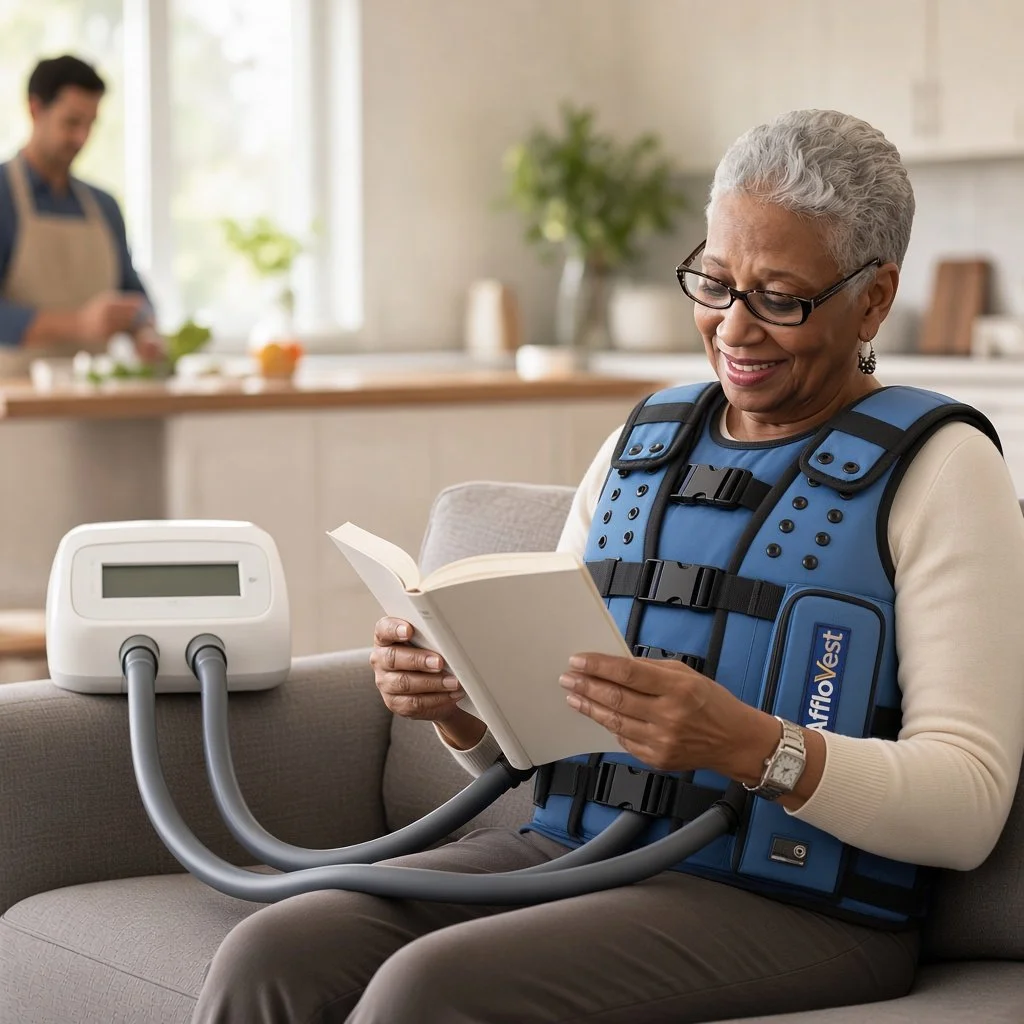
If you live with a lung or neuromuscular condition, thick mucus can make every breath feel harder. It can also raise your risk of lung infections. Your doctor may have mentioned "vest therapy" or "HFCWO." It sounds technical, but the idea is simple.
This guide explains what the vest does, who it helps, and what to expect when you start therapy at home.
What Does HFCWO Stand For?
HFCWO stands for High-Frequency Chest Wall Oscillation. Here is what each part means:
High-frequency: many small pulses per second
Chest wall: the vest wraps around your chest
Oscillation: a fast, gentle back-and-forth motion
The vest is soft and inflatable, or fitted with small motors, depending on the model. It connects to a machine that makes it vibrate. That vibration does work your lungs and cough can't always do on their own.
How Does Vest Therapy Work?
Think of shaking a bottle of ketchup to get it moving. The vest works in a similar way. According to the Cystic Fibrosis Foundation, the vibrations loosen and thin mucus. They also help pull it away from the airway walls and move it toward the larger airways, where it's easier to clear.
The process happens in three simple steps:
Vibrate: The vest gently pulses against your chest.
Loosen: Mucus breaks free from the small airways and thins out.
Clear: You stop to cough or "huff," a strong, open-mouth exhale, to bring the mucus up and out.
Who Can Benefit From Vest Therapy?
Vest therapy is often prescribed for people who make extra mucus or who have trouble coughing it up. Common conditions include:
Cystic fibrosis (CF): Daily airway clearance is a core part of CF care. Learn more in our article on how vest therapy supports people with cystic fibrosis.
Bronchiectasis: Widened, damaged airways trap mucus. Clearing it regularly is a key part of bronchiectasis treatment, according to the American Thoracic Society.
Neuromuscular conditions: Weak breathing and cough muscles can let mucus build up. This may happen with muscular dystrophy, ALS and other motor neuron diseases, multiple sclerosis, post-polio syndrome, or spinal cord injury.
Your doctor decides whether the vest is right for you. Insurance usually has its own rules, too. For example, Medicare's coverage policy for HFCWO devices covers patients with CF, CT-confirmed bronchiectasis, or certain neuromuscular conditions. It also requires that other airway clearance methods have been tried and didn't work well enough. Our team can help you understand what your plan requires.
What Does a Typical Session Look Like?
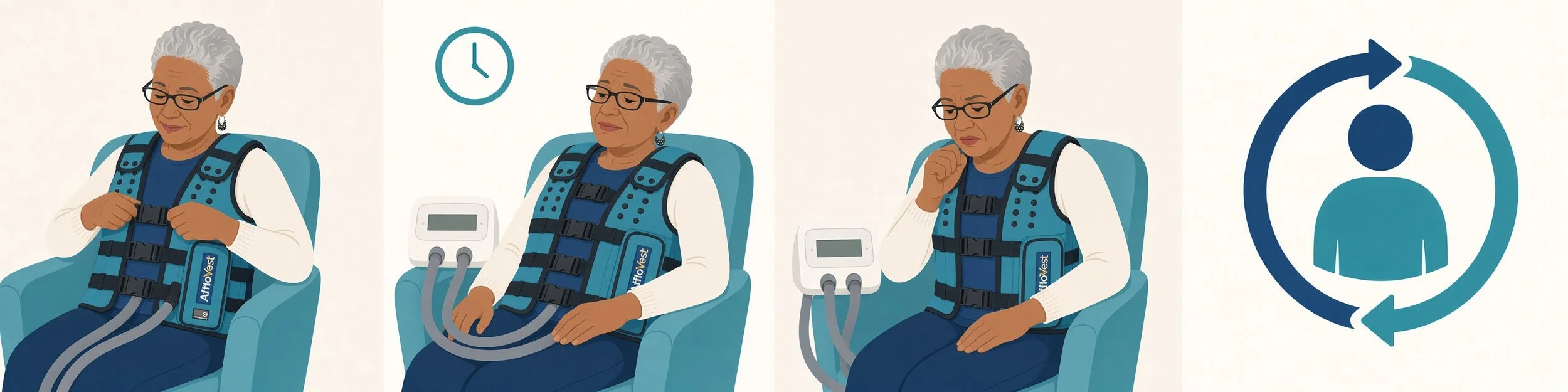
Most people do vest therapy at home, sitting comfortably in a chair. A session usually goes like this:
Put on the vest. It should feel snug but not tight.
Run the vest in short rounds. The Cystic Fibrosis Foundation describes rounds of about five minutes.
Pause to huff or cough. Clear the mucus loosened during each round.
Repeat. A full session usually takes about 20 to 30 minutes.
Your doctor will set how often you do therapy and at what settings. Some people also take inhaled medications before or during their session. Ask your care team about the right order for your treatments.
Choosing the Right Vest
Today's vests are lighter and easier to live with than older models. Integrated carries leading airway clearance vests, including AffloVest and InCourage. The two work a little differently:
Portable, battery-powered vests let you move around during therapy, so you can do light chores or walk around the house.
Air-pulse vests connect to a base unit with hoses and are typically used while seated.
The best choice depends on your condition, your daily routine, and what your insurance covers. A respiratory therapist can help you compare options and get the right fit.
Tips for Getting the Most From Your Vest
Stay consistent. Airway clearance works best as a daily habit, even on days you feel well.
Make it part of your routine. Pair therapy with something you enjoy, like a show, a podcast, or a phone call.
Drink fluids unless your doctor has limited them. Staying hydrated can help keep mucus thinner.
Keep the vest clean and check hoses or straps for wear.
Speak up if therapy feels uncomfortable or you notice more mucus, fever, or shortness of breath than usual. Call your doctor or care team.
How Integrated Supports Vest Therapy at Home
Starting vest therapy is easier with a team behind you. Integrated's vest therapy program is built around hands-on, local support:
In-home setup and fitting so the vest fits correctly from day one
Training for patients and caregivers on technique, settings, and cleaning
Help with insurance paperwork and documentation
Ongoing support from respiratory clinicians who know airway clearance
Serving Chicagoland, Northwest Indiana, and the St. Louis Area
We support vest therapy patients from our offices in Carol Stream and Westmont, Illinois, and Eureka, Missouri. That includes families across DuPage County, the western Chicago suburbs, Northwest Indiana, Southeast Wisconsin, and the greater St. Louis region. When you work with us, help is close to home.
Frequently Asked Questions
-
No. Most people describe it as a strong, rapid shaking or "massage" feeling. Your therapist can adjust the fit and settings if you're uncomfortable.
-
Yes. Vests come in many sizes, and children with CF and other conditions often use them. Your child's care team will guide the settings.
-
According to the Cystic Fibrosis Foundation, most insurance plans cover vests when they're medically necessary. Coverage rules vary, and our team can help you check yours.
Have questions about vest therapy for yourself or a loved one? Our respiratory team in Carol Stream, Westmont, and Eureka is here to help with fitting, training, and insurance. Ask about Vest Therapy → or call (877) 426-0202.
Three locations serving the Midwest
Visit us in person, get directions, or read what patients are saying about each location on Google.
Carol Stream, IL
Carol Stream, IL 60188
Westmont, IL
Westmont, IL 60559
Eureka, MO
Eureka, MO 63025